
Desempeño reproductivo en el primer y segundo servicio en borregas Pampinta
DOI:
https://doi.org/10.63207/ai.v9i17.169Keywords:
Sheep, Pampinta, reproductive performance, body condition, first and second service, pregnancy, calvingAbstract
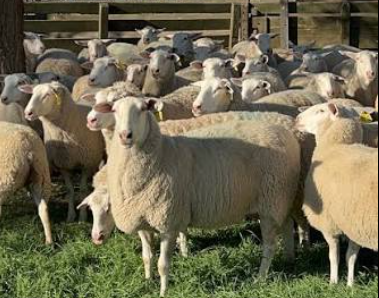
The study aimed to evaluate the reproductive performance of lambs and sheep of the Pampinta breed during their first and second service, especially considering the body condition of the animals and the seminal quality of the rams used. The work was carried out between 2015 and 2023 at INTA’s Anguil Experimental Station, located in the province of La Pampa. For the first service, seven-month-old lambs were used, previously selected for their body condition (2.5 to 3) and good physical development. As a reproductive management strategy, a feeding plan of type flushing with corn grains for fourteen days prior to service was implemented and the male effect was applied forty-eight hours before the start of the confinement. The service was carried out in a corral, with a duration of thirty-seven days, and the pregnancy assessment was made by ultrasound. Also, the rams used were selected phenotypically and submitted to a physical and seminal examination, with no records of rejection due to low sperm quality. The results showed an average pregnancy rate of 74.7% in the first service and 93.1% in the second, this difference being statistically significant (P<0.05). As for calving, the lambs reached 68% while the ewes reached 92%. There were no significant differences in fertility between the two categories, with about half of births being twins, 35% single births and 10% triplets. It is important to note that the early reproductive experience of the lambs did not negatively affect their performance in the second service. Overall, second-parturition lambs' pregnancy ranged from 90% to 96%, showing that with proper management of body condition, nutrition and health, it is possible to achieve high reproductive rates without compromising future animal productivity. The Pampinta breed showed a favorable early reproductive behavior, which allows to advance the first incarnation and improve the overall efficiency of the production system.
Downloads
References
Amanecer Rural (2020) - Alimentación de la reproductora ovina – AGRO EMPRESARIO - Disponible en: https://www.agroempresario.com.ar/notas6781.html
Banchero, G., & Quintans, G. (2008). Flushing corto” una herramienta para aumentar el porcentaje de mellizos en ovejas de baja a moderada prolificidad. Revista INIA, 14, 8-12.
Banchero, G., Vázquez, A., Quintans, G., & Ciappesoni, G. (2014). Estudio preliminar del crecimiento, desarrollo e indicadores reproductivos de hembras de seis biotipos ovinos en Uruguay. Agrociencia (Uruguay), 18(2), 117-127.
Banchero, G., Vázquez, A., Irarí, N., Ciappesoni, G., & Quintans, G. (2016). Estudio preliminar de la prolificidad y habilidad materna de seis biotipos ovinos en Uruguay. Agrociencia (Uruguay), 20(1), 90-98.
Cueto, M., Gibbons, A., García, V. J., Wolff, M., & Arrigo, J. (1993). Obtención, procesamiento y conservación del semen ovino. Manual de Divulgación. Comunicación Técnica de Producción Animal del INTA, Bariloche, (200).
Dwyer CM 2003. Behavioural development in the neonatal lamb: effect of
maternal and birth-related factors. Theriogenology 59, 1027–1050.
Fernández Abella, D., Cueto, M., & Ferrugem Moraes, J. C. (2017). Factores que afectan la supervivencia del cordero. Revista argentina de producción animal, 17(2), 1-16.
Fogarty, N. M., Ingham, V. M., Gilmour, A. R., Afolayan, R. A., Cummins, L. J., Edwards, J. H., & Gaunt, G. M. (2007). Genetic evaluation of crossbred lamb production. 5. Age of puberty and lambing performance of yearling crossbred ewes. Australian Journal of Agricultural Research, 58(9), 928-934.
Gibbons, A., Cueto, M., Wolff, M., Arrigo, J., & García, J. (2004). Obtención, procesamiento y conservación del semen de ovino.
Hinch, G. N., & Brien, F. (2014). Lamb survival in Australian flocks: a review. Animal Production Science, 54(6), 656-666.
InfoStat versión (2011). Grupo InfoStat, FCA, Universidad Nacional de Córdoba, Argentina. http://www.infostat.com.ar
Jornada Nacional 2024- Salto Grande Uruguay. 9° Taller de gestación en ovinos. Majadas EEFAS: del parto al primer servicio. 8 de agosto de 2024.
Kenyon, P. R., & Blair, H. T. (2014). Foetal programming in sheep–effects on production. Small Ruminant Research, 118(1-3), 16-30.
Montossi, F.; Risso, D.F.; Berretta, E.J.; Levratto, J.; Rodríguez Motta, J.P. (1994). Uso estratégico de Avenas en la recría. En: Pasturas y Producción Animal en Basalto. Tacuarembó: INIA. p. 23 - 32. (Serie Actividades Difusión; 37).
San Julián, R.; Montossi, F.; Motta, J.P.; Zamit, W. (1996). Uso de técnicas de alimentación preferencial de corderos al pie de las madres sobre campo natural. En: Producción Ganadera en Basalto. Tacuarembó: INIA. p (Vil) 7-10. (Serie Actividades Difusión; 108).
San Julián, R.; Montossi, F.; De Mattos, D.; Berretta, E.J.; Rodríguez Motta, J.P. (1997). Efecto de la alimentación invernal con avena sobre la recría de borregas Corriedale en Basalto. Revista Argentina de Producción Animal. (19 Congreso Binacional de Producción Animal, Argentina-Uruguay). 17 (1): 49 50.
Scaramuzzi, R. J., Campbell, B. K., Downing, J. A., Kendall, N. R., Khalid, M., Muñoz-Gutiérrez, M., & Somchit, A. (2006). A review of the effects of supplementary nutrition in the ewe on the concentrations of reproductive and metabolic hormones and the mechanisms that regulate folliculogenesis and ovulation rate. Reproduction Nutrition Development, 46(4), 339-354.
Thompson, A.N., Ferguson, M.B., Gordon, D.J., Kearney, G.A., Oldham, C.M., Paganoni, B.L. (2011). Improving the nutrition of Merino ewes during pregnancy increases the fleece weight and reduces the fibre diameter of their progeny’s wool during their lifetime and these effects can be predicted from the ewes live weight profile. Anim. Prod. Sci. 51,794–804.
Downloads
Published
Versions
- 2026-07-29 (2)
- 2026-07-29 (1)
How to Cite
Issue
Section
License
Copyright (c) 2026 Micaela Stazionati, Georgget Elizabeth Banchero

This work is licensed under a Creative Commons Attribution-NonCommercial 4.0 International License.